
Investing in early childhood development changes futures. When you donate to early learning centres managed by Project Hope, you are providing vital tools to preschoolers in the Valley of 1000 Hills, KwaZulu-Natal.
You want to help even the score between the ‘have lots’ and ‘have nots’. Who do you trust with your hard-earned funds? We provide a safe way to contribute towards a vulnerable child’s early development. Our team shares your passion: Give a child the best start in life.
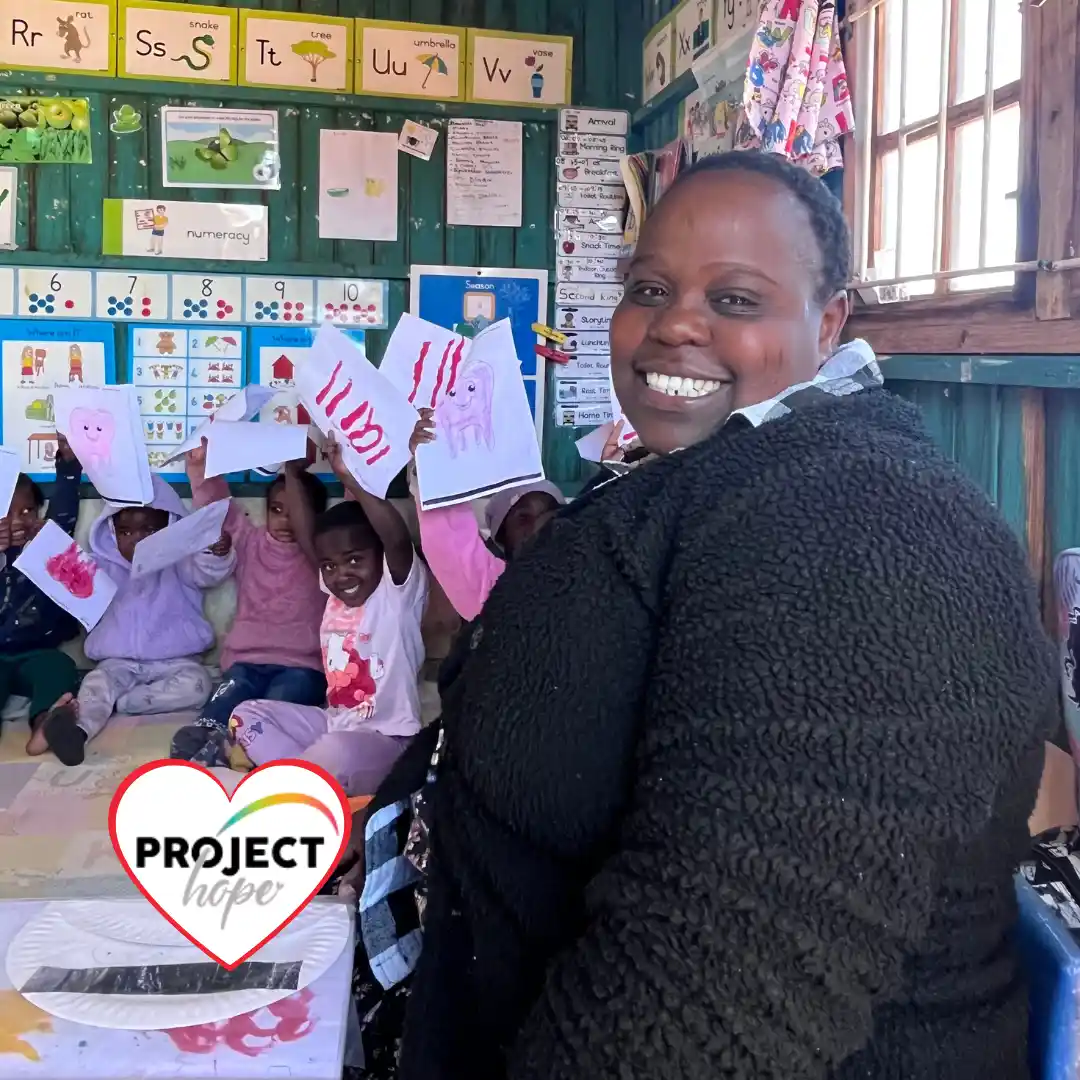
“We don’t need NO education” – Pink Floyd
Our children deserve access to quality learning.
Donate to early learning centres affiliated with Project Hope’s holistic ECD programme and make a meaningful difference. Your generosity fuels tangible solutions to the real-world roadblocks that restrict a South African child’s access to quality education.
Below are three areas where we focus our support of rural classrooms and the answers to FAQs about how our community-driven model transforms young futures.
Rooted in KZN, Built for Mzansi Children!
1. Empower Community Practitioners: Zizi’s NQF Certificate Journey
Welcome to Zizile “Zizi” Mdunge’s classroom at Siyamudumisa Daycare, where hugs are free. Located in KwaNyuswa, deep in the heart of KZN, this is one of Project Hope’s two partner ECD centres.
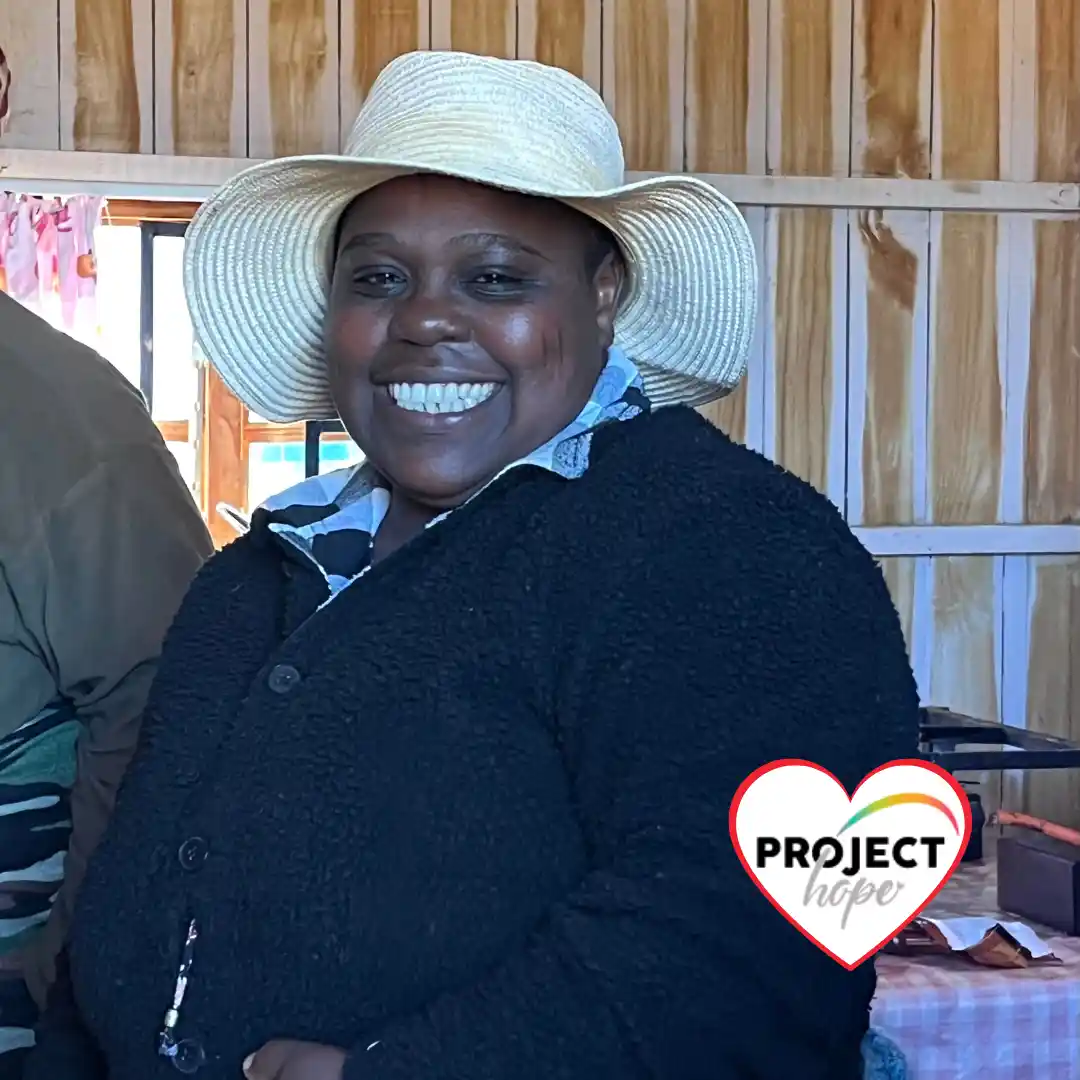
Zizi brings more than a decade of experience to her three-year-old learners. When asked why she became a teacher, her answer was simple, “Because that’s what I always wanted to be.”
Zizi radiates pure joy and ensures our most vulnerable children feel seen, heard, and loved. This vital work forms the core of our non-profit early childhood development programme.
Her path to qualification requires steady determination. Zizi has already completed both her ECD Level 1 and Level 2—part-time over four years. Self-funded on a modest salary, she balanced long days of childcare with weekend studies and writing assignments. Now Zizi has her sights set on an NQF Level 4 certification.
Project Hope connects passionate donors with educators needing tuition support.
What does it cost to become a qualified ECD teacher in South Africa?
South Africa’s push for a structured Early Childhood Development (ECD) workforce is accelerating. Currently, the National Qualifications Framework (NQF) Level 4 serves as the baseline certification for teaching children from birth to five years old (Pre-Grade R).
- NQF Level 1: General Educational Certificate.
- NQF Level 2: Foundational Certificate (birth to four years old).
- NQF Level 3: Intermediate Certificate (birth to four years old).
- NQF Level 4: National Certificate (birth to five years old).
Completing the coursework is only half the battle:
- Prohibitive Financial Barriers: In KZN, an NQF Level 4 qualification costs roughly R22,000 over two years, excluding bi-weekly transport to Pinetown training centres.
- Ground-Level Confusion: Shifting accreditation rules leave local centre owners fearing sudden municipal takeovers.
- Rigorous Assessments: Educators must balance intensive classroom practicals before clearing a national External Integrated Summative Assessment (EISA).
- Professional Registration Mandates: Following graduation, practitioners must register with the South African Council for Educators (SACE).
Contact Sara, Project Hope Director, today to fund local ecd teacher qualifications so no child falls behind.
How do I safely donate to non-profits supporting early learning centres?
A fair question. You want reassurance that your hard-earned funds result in upgraded educational environments.
Our team operates as a registered NPC and PBO, working on the ground with our two affiliated preschools since 2020. We listen to teacher needs and execute proven solutions.
We also rely on fellow organisations for expert assistance in specialised compliance areas. Navigating shifting government regulations is tricky and presents frightening roadblocks for grassroots school owners—as seen in Sanele’s story of early learning transformation.
Through our strategic partnership with True North, Project Hope helps guide our local crèches through municipal bureaucracy and SACE processes. Your support makes a sustainable, scalable impact at a classroom level—unlocking the generational future of a small village.
No matter the amount, we make sure every cent counts!
Individual and corporate donors can safely contribute early childhood development funding online via PayFast, PayPal, Zapper, or direct Bank Transfer. Or, contact our director to set up a monthly sponsorship.
Project Hope walks alongside local champions to turn determination into a thriving, accredited preschool environment.
2. Deliver Data-Driven Curriculum & Track ECD Milestones
As a registered nurse and Project Hope founder, Sara has extensive experience in child physical wellness. She is also a dedicated mother. Formal teaching frameworks, however, initially sat outside her primary expertise.
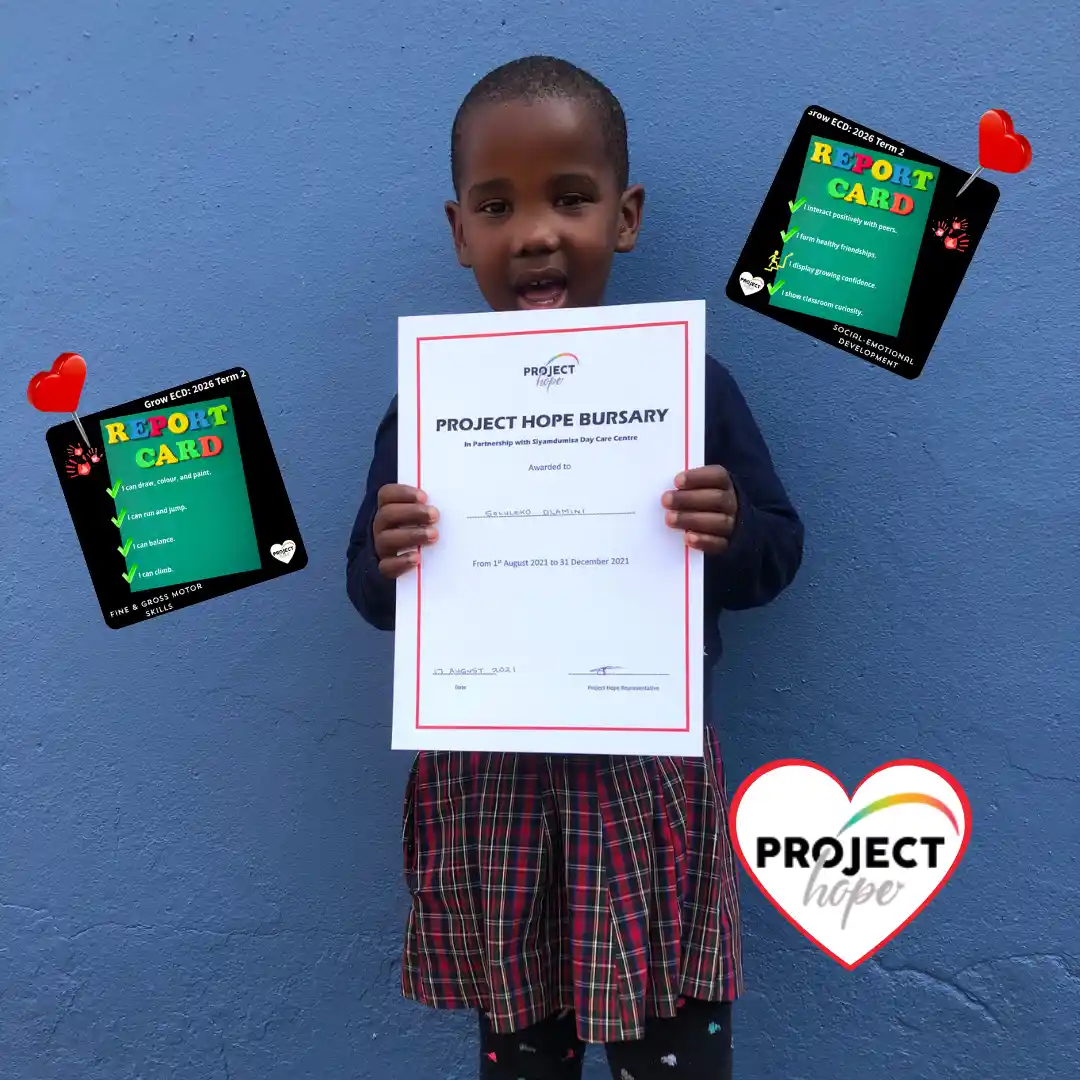
During Project Hope’s first three years, a simple truth weighed heavily on Sara’s heart: regardless of a rural preschool’s physical state, every child deserves access to high-quality early education.
In April 2023, Sara reached out to Tara Rosser, GROW ECD’s Regional Manager for KZN. This relationship led directly to the implementation of the GROW ECD programme within our network classrooms.
The system uses mobile-first technology, allowing our educators to compile comprehensive term report cards that track developmental milestones. Critically, our teachers can see where a child is struggling and where early intervention is needed.
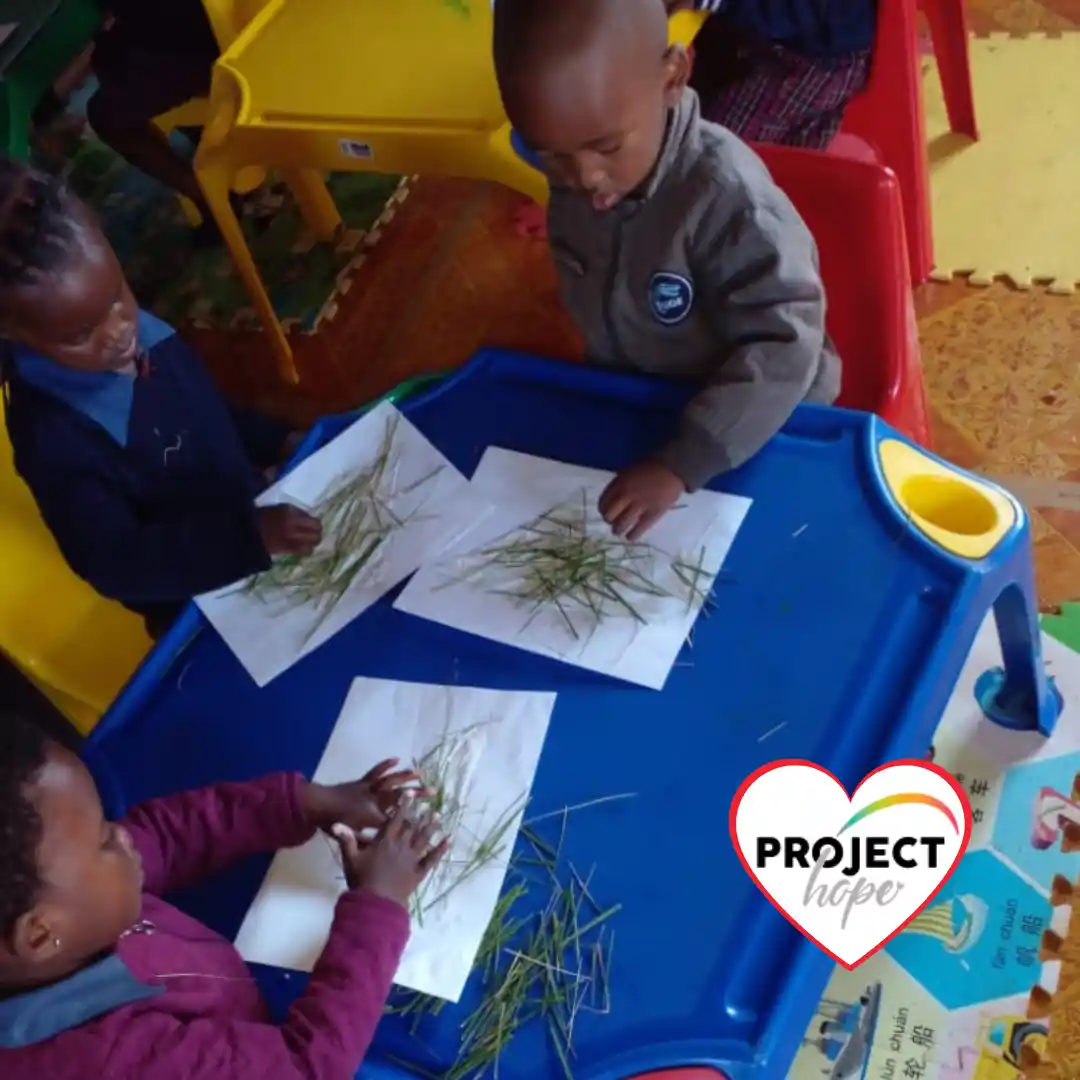
See how this powerful educational tool helps transform precious little lives like Olive, Lucky, and Lihle on our News Page.
What tools does Project Hope use to track progress in preschoolers?
Our strategic partnership with GROW ECD has equipped our affiliate preschools with a comprehensive, 40-week play-based curriculum. Thanks to an upfront grant and targeted fundraising, our partner centres face zero monthly subscription fees to utilise this platform.
Teachers use this innovative “tech-with-a-heart” to evaluate learners across five core domains of the standardised Early Learning Outcomes Measure (ELOM):
- Early Literacy and Language: Building vocabulary, text comprehension, and foundational communication skills.
- Numeracy and Mathematics: Developing early concepts of numbers, counting, spatial awareness, and basic problem-solving.
- Cognition and Executive Functioning: Strengthening memory, attention span, mental flexibility, and the ability to follow complex instructions.
- Fine Motor Coordination and Visual Motor Integration: Nurturing hand-eye coordination and muscle control required for writing and drawing.
- Gross Motor Development: Enhancing physical balance, core strength, large muscle coordination, and general spatial movement.
The programme is designed for children aged 2 to 5 years. It maps weekly themes like transport, emotions, nature, and space directly to physical equipment.
The classroom kit provides matching art materials and colourful posters that bring the themes to life. Through the GROW app, educators have access to rhymes, songs, and instructional videos. We have watched teachers gain confidence and classrooms become brighter and more stimulating.
You can scroll through Lihle’s report cards and can see the promising change in Lucky’s and Olive’s term 2 updates on our news feed.
How do I partner with early learning centres for vulnerable children?
Private sponsors and corporate investors should look for verified, data-backed models before allocating social upliftment funds. Our two flagship partner centres are already equipped with the GROW framework and operating smoothly.
In 2026, Project Hope decided to double down on play to accelerate cognitive development. We are currently in the final phases of cementing a relationship with a major international organisation boasting 28 years of global experience in the ECD sphere.
The system is designed for underprivileged communities and addresses a significant gap in our model that we struggle to foster—social-emotional resilience. Our goal is to implement this over-arching approach to classroom activities. After all, play is how children learn about themselves and the world around them.
We would love you to sponsor an ECD classroom or contribute towards this vital technology. Implementing this curriculum addition costs a once-off amount of just R500 ($30) per child. Scaling your impact across an entire classroom requires a bulk investment, e.g., R35,000 covers the 70 beautiful souls from Siyamudumisa Daycare in KwaNyuswa.
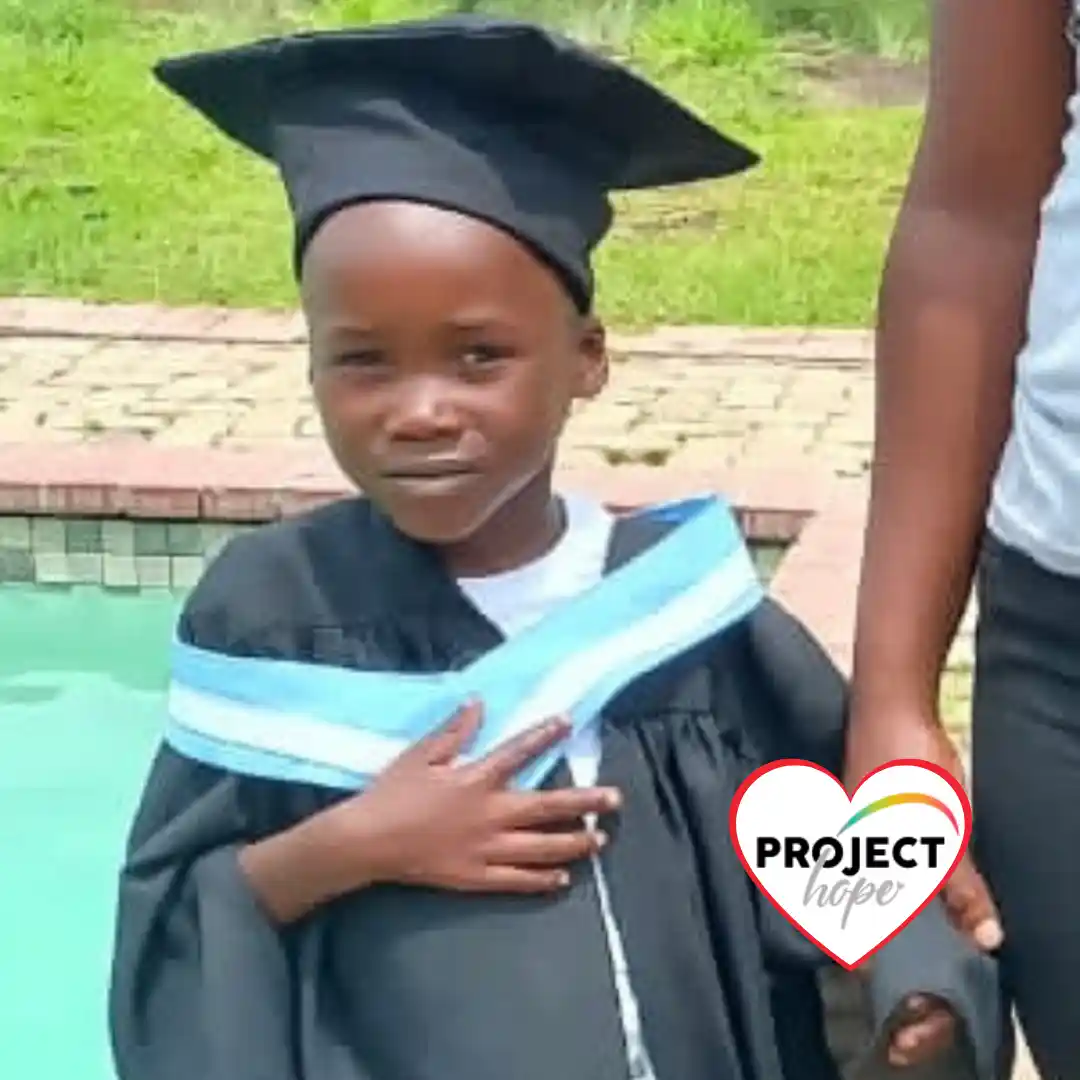
Completely transform a young learner’s life.
3. Provide Essential Educational Tools for Underprivileged Toddlers
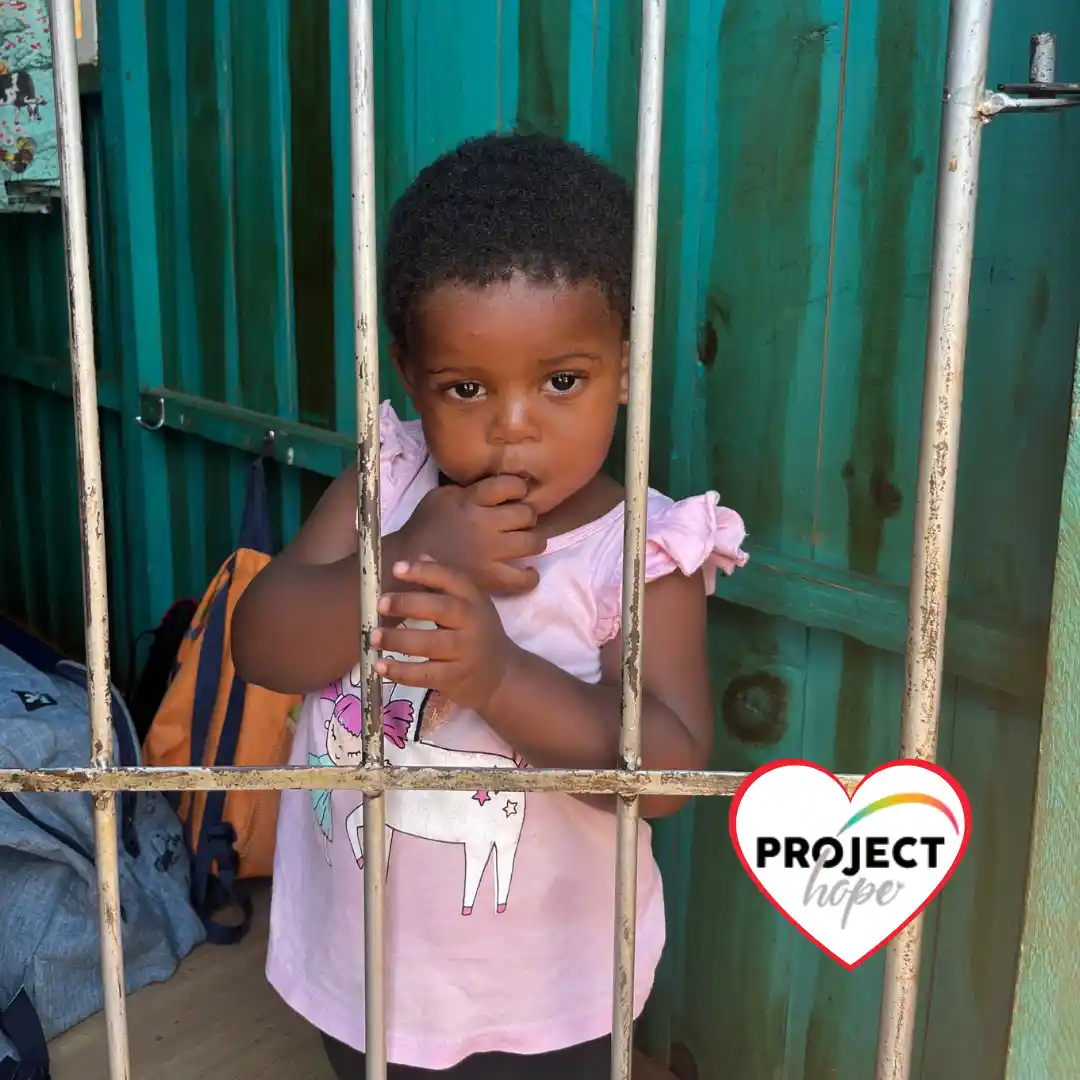
Poverty carries a deep sense of pain for parents who cannot provide basic necessities for their little ones. Many children arrive at preschool carrying an empty backpack and wearing worn-out clothing.
Project Hope steps in to restore a child’s dignity and ease this heavy emotional burden. Every preschooler entering our sponsorship programme receives a full age-appropriate stationery kit alongside the personal items required to thrive.
When a child opens their very own school bag to find their own books and bright materials, something changes. They don’t just feel prepared—they feel valued.
How many items go into a Project Hope Preschoolers Welcome Pack?
Children feel a deep sense of belonging when they own their own learning materials. Our custom welcome packs contain educational supplies, stationery essentials, and vital hygiene products to protect a child’s dignity.
We tailor each pack to meet the individual developmental needs of every boy and girl in our care. If you would like to become one of our cherished Project Hope fairies, we welcome contributions from our active wish list:
Classroom & Stationery Essentials:
- Reams of white printing paper
- A5 hardcover exercise books
- Jumbo wax crayons for little fingers
- Jumbo glue sticks and colourful playdough
- Small backpacks and durable plastic water bottles
Hygiene & Centre Essentials:
- Baby wipes and disposable nappy bags
- Jars of Vaseline (100ml)
- Green Sunlight soap bars
- Boxes of tissues and toilet paper rolls
- Liquid handwash bottles
Please note that this is not a comprehensive supplies checklist. Our team is actively compiling a complete classroom resources guide in a downloadable PDF format for your ease of use.
You can connect directly with our team to drop off physical supplies.
Where can I donate educational tools to preschoolers in need?
Through our digital marketplace, you can purchase handmade sensory toys with a purpose and bring immediate comfort to a child’s restless heart. Mercy’s plush teddy bear rounds out our wrap-around-model of care.
Beyond traditional stationery supplies, tactile tools play an essential role in early learning development. Soft toys help children navigate separation anxiety and settle peacefully in new environments.
Buy and donate a Mercy Bear towards our welcome pack stockpile. Your single transaction uplifts a local artisan and provides emotional grounding for the vulnerable child. Support underprivileged preschoolers.
Join the Project Hope Community
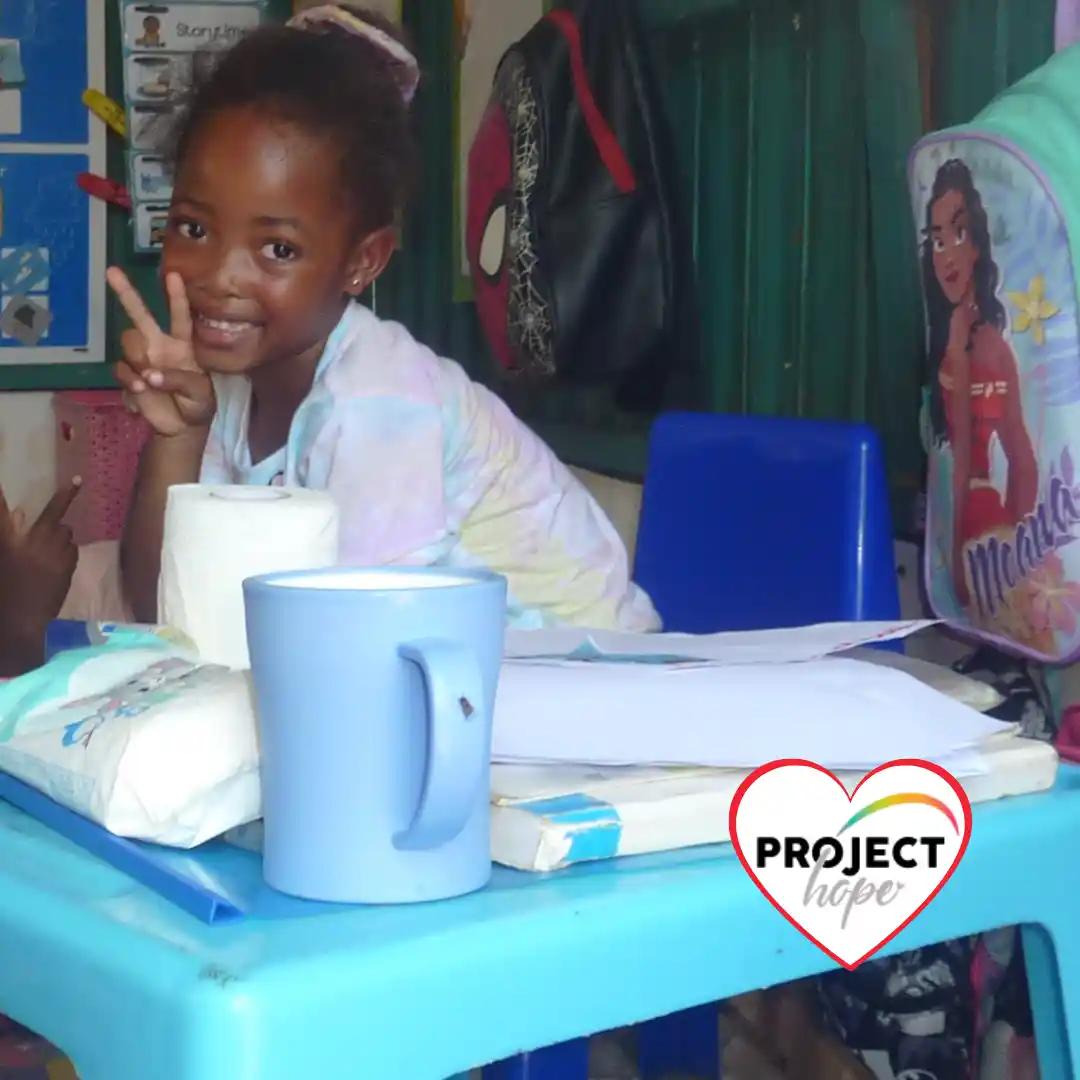
We believe a child’s start in life should never be determined by where they are born or their family’s struggles. Fortunately, an invested community can give a child under 5 years an awesome childhood.
You may prefer to play a more active role in one child’s future, receiving updates and regular term progress reports. For a lasting impact, connect directly with Sara to sponsor a child in Africa for R700 a month.
Your generosity keeps one of our little girls or boys fed, clean, safe, and learning.
Every single week, we share real-time updates and stories of resilience straight from our classrooms. Follow our ongoing journey on Facebook and Instagram.
Thank you for taking the time to read about our work and exploring how you can support our partner preschools.
With love,
The Project Hope Family